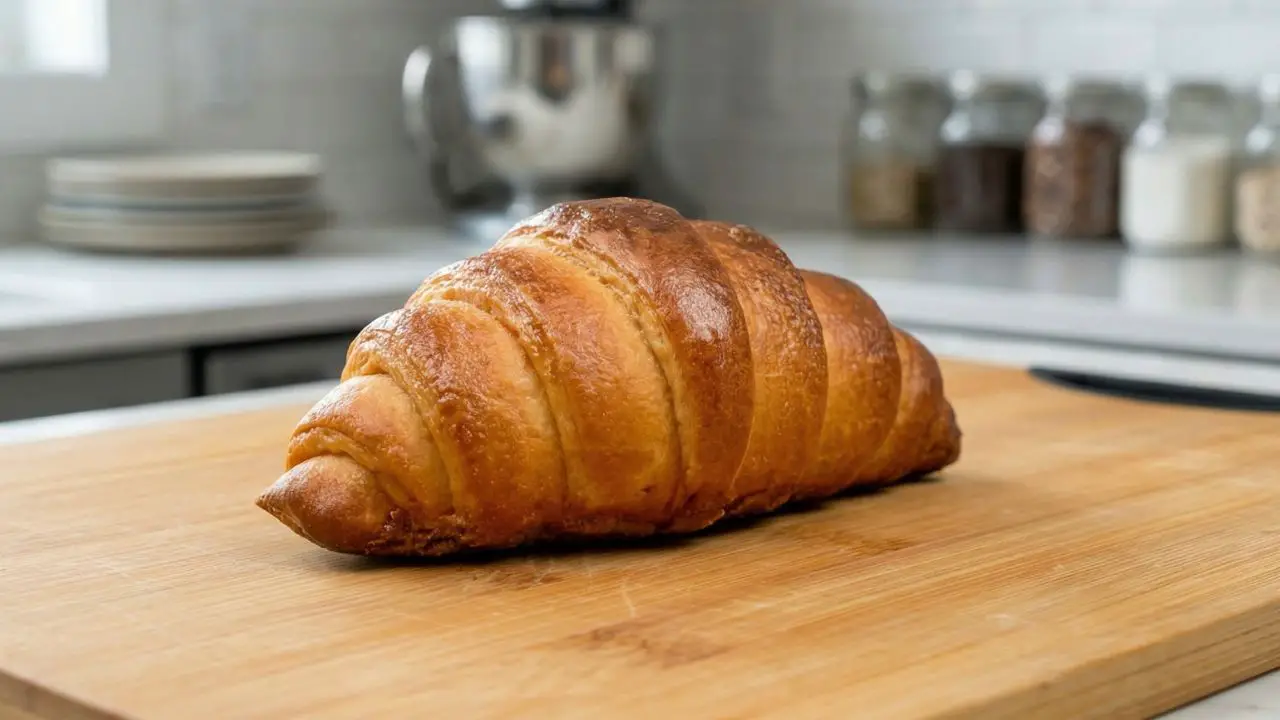
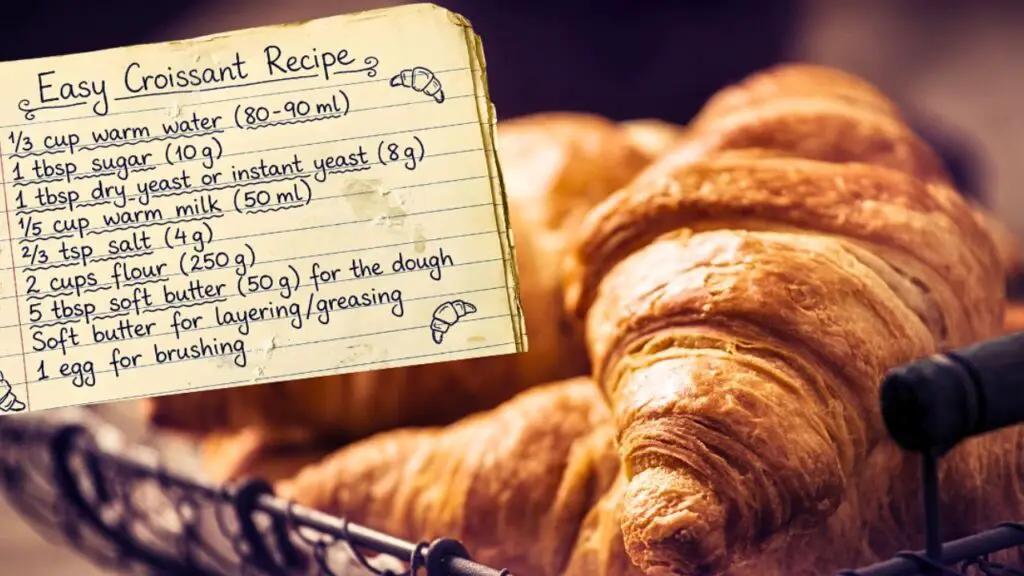
I found this quick and easy croissant recipe, and honestly, I had to try it… because homemade croissants that are actually doable at home? How can you not?! And you know what, these turned out so golden, flaky, buttery, and pretty that I was genuinely surprised by how well this simple method worked.
If you have ever wanted to learn how to make croissants from scratch but felt a little intimidated by the classic method, this is such a nice place to start. It is simpler, less fussy, and still gives you that lovely croissant feel with soft layers inside and a buttery top. I love this one.
If you want to see how I made this easy croissant recipe, you can watch the video below. And if you liked it, please like the video and subscribe to my YouTube channel for more easy baking recipes.
Why you’ll love this easy croissant recipe
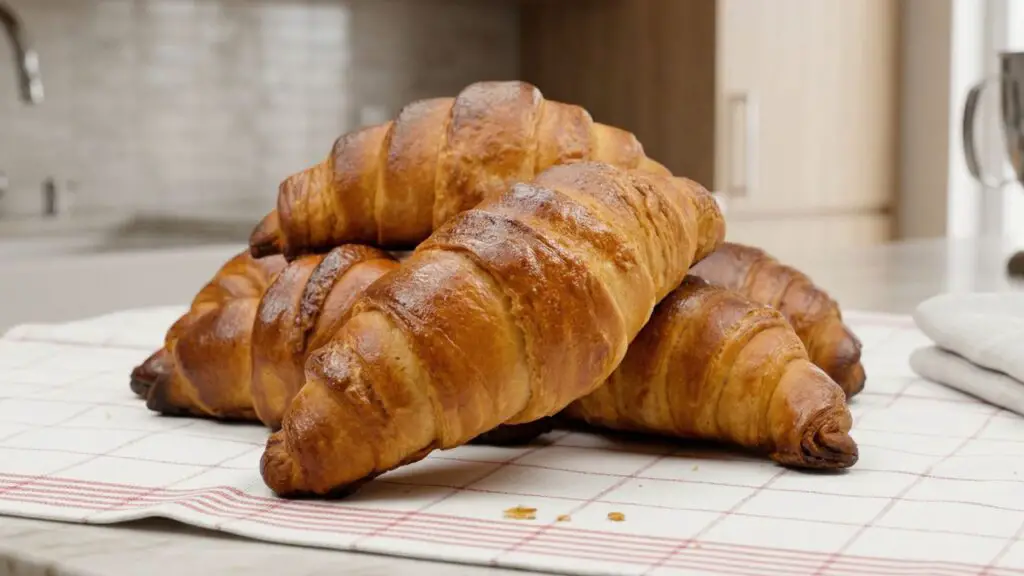
These croissants are much more approachable than a traditional bakery-style version, which is exactly why I’m obsessed with them. You still get that buttery flavor and layered look, but the process feels a lot more realistic for home bakers.
I also love that the dough comes together with simple ingredients, and you do not need any fancy equipment. A bowl, a rolling pin, a baking sheet, and a little patience… that is really it. In my opinion, that makes this such a good beginner croissant recipe.
Texture + flavor of these homemade croissants

These homemade croissants bake up golden on the outside with a soft, light, layered inside. They are buttery, a little crisp around the edges, and super delicious while still warm. Let’s be honest, warm croissants fresh from the oven are one of the best things ever.
Because this is an easier croissant recipe, the inside will not look exactly like a super technical French bakery croissant with hundreds of paper-thin layers. But it is still flaky, airy, and so satisfying to pull apart. That is part of the charm here.
Did You Know: Classic croissants usually have around 25 to 81 thin layers, which is why they can look so delicate and flaky. This one is a lot simpler, but it still turns out buttery, flaky, and honestly so satisfying.
Easy croissant recipe ingredients
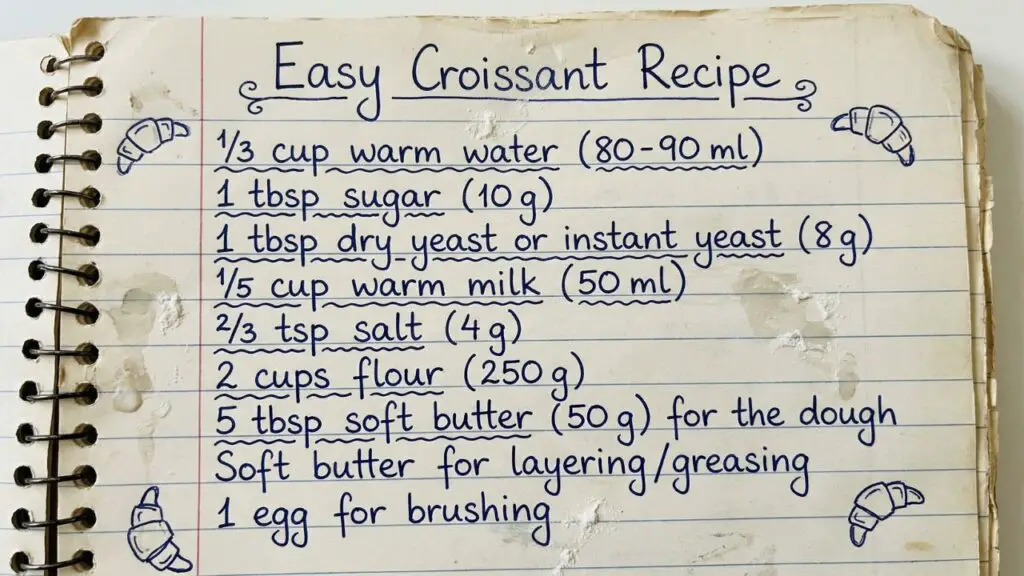
Here is everything you need for this easy croissant recipe:
- 1/3 cup warm water, 80 to 90 ml
- 1 tablespoon granulated sugar, 10 g
- 1 tablespoon dry yeast or instant yeast, 8 g
- 1/5 cup warm milk, 50 ml
- 2/3 teaspoon salt, 4 g
- 2 cups all-purpose flour 250 g
- 5 tablespoons soft butter for the dough, 50 g
- soft butter for layering
- 1 egg, beaten, for brushing
Equipment
You do not need much for this recipe, which I really appreciate.
- large mixing bowl
- damp kitchen towel
- rolling pin
- plate or tray for stacking the dough circles
- baking sheet
- parchment paper
- pastry brush
Let’s make these croissants together
Step 1: Add 1/3 cup of lukewarm water to a large mixing bowl. Add 1 tablespoon of granulated sugar and 1 tablespoon of dry yeast or instant yeast. Stir briefly, then leave it for about 10 minutes.
The top should look foamy and a little bubbly when the yeast is active. It should also smell lightly yeasty and slightly sweet.
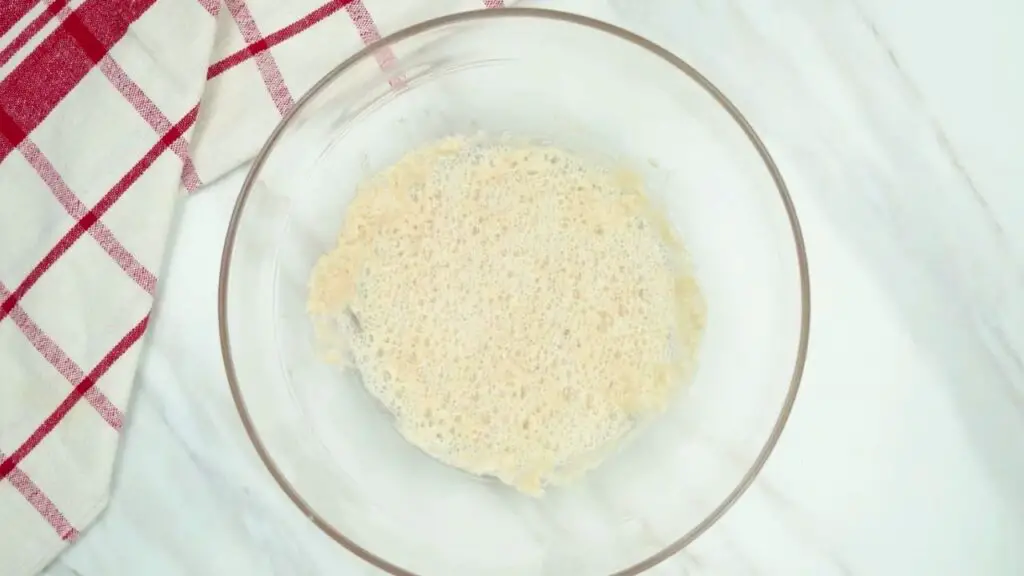
Note: If the mixture stays completely flat after 10 to 15 minutes, the yeast may not be active. In that case, it is best to start again before adding the rest of the ingredients.
Step 2: Add 1/5 cup of lukewarm milk and 2/3 teaspoon of salt to the yeast mixture. Stir to combine.
At this point, the mixture should look smooth and cloudy.
Step 3: Add 2 cups of all-purpose flour or bread flour. Use your hand to bring everything together until a rough dough forms. Press and fold the dough until there are no dry spots of flour left.
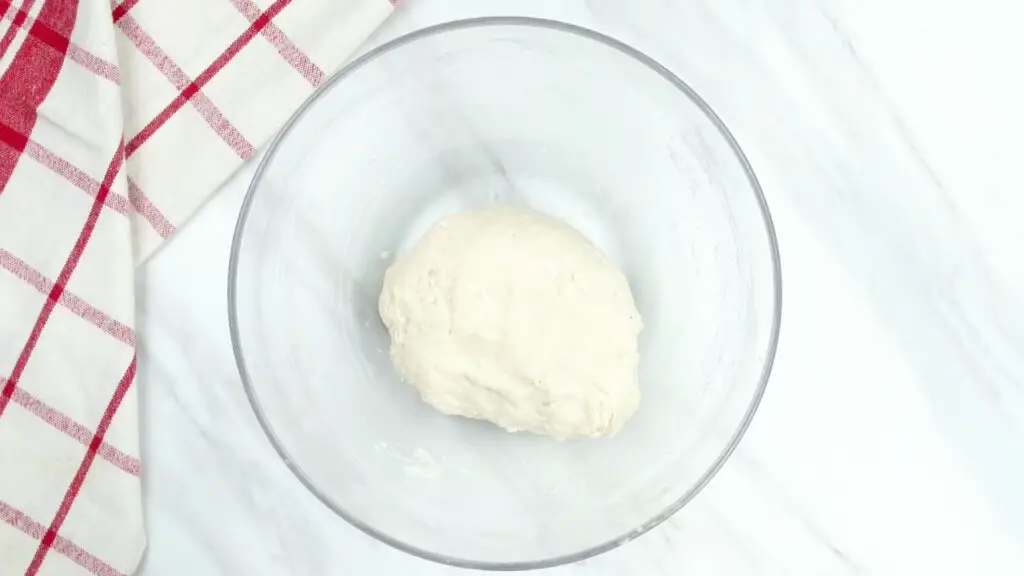
The dough will look shaggy at first, and that is completely normal. It should come together into a soft, slightly sticky dough.
Step 4: Add 5 tablespoons of soft butter to the dough and work it in with your hands until fully absorbed.
At first the dough may feel slippery, sticky, and a little messy. Keep going. After a few minutes, it should start to feel smoother and softer.
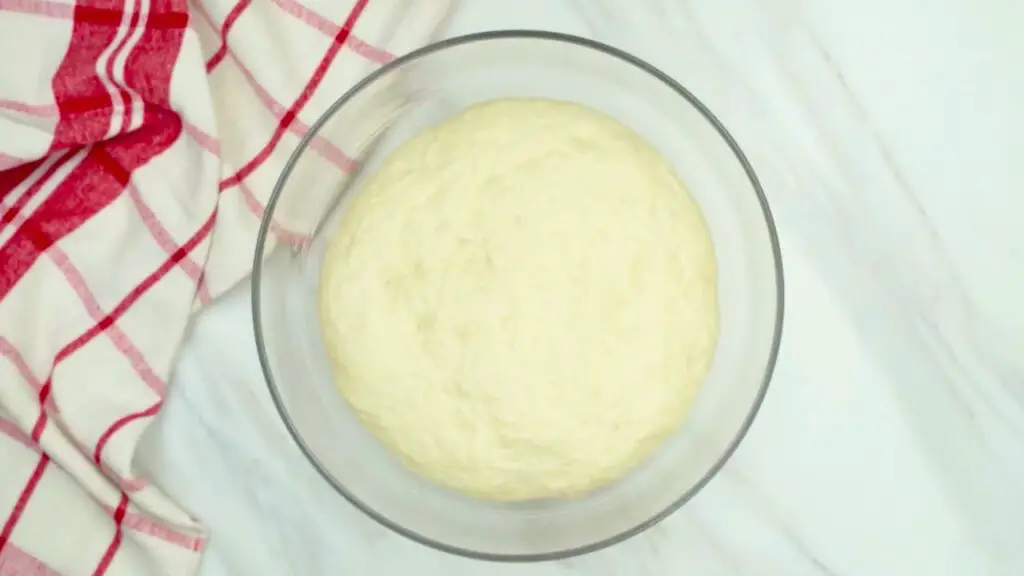
Step 5: Cover the dough with a damp kitchen towel and let it rest at room temperature for about 1 hour, or until doubled in size.
When it is ready, the dough should look puffier and feel lighter. If your kitchen is cool, give it a bit longer.
Step 6: Place the dough on a lightly floured surface and gently roll it into a log. Divide it into 8 equal pieces.
Try to keep the pieces fairly even so the dough circles will be close in size later.
Step 7: Take each piece and shape it into a ball by pulling the edges toward the center on top and pinching them together. Keep turning the dough and pulling in the edges until each piece looks rounded and holds its shape. Then gently press it down a little.
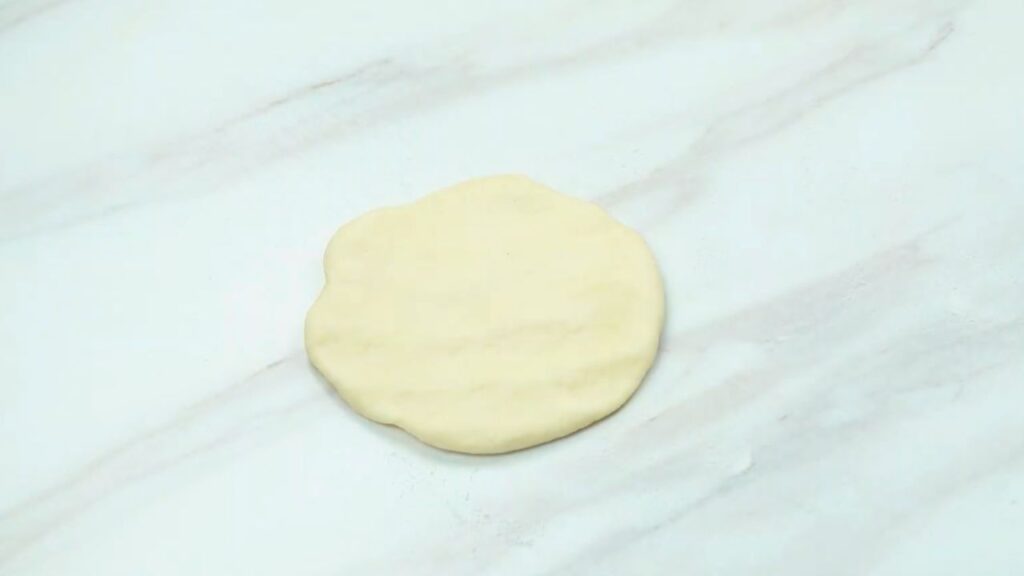
They do not need to look perfect. Just aim for a similar size and shape.
Step 8: Use a rolling pin to roll each piece of dough into a thin circle.
Roll from the center outward and try to keep the circles close in size. You will be stacking them, so the neater they are, the easier the next step will be.
Step 9: Brush a thin layer of soft butter between each layer of dough, stacking the circles as you go.
Spread the butter all the way to the edges so there are no dry spots. This dough makes 8 layers in total, which is much less than a classic croissant recipe, but that is part of what makes this method feel so doable at home.
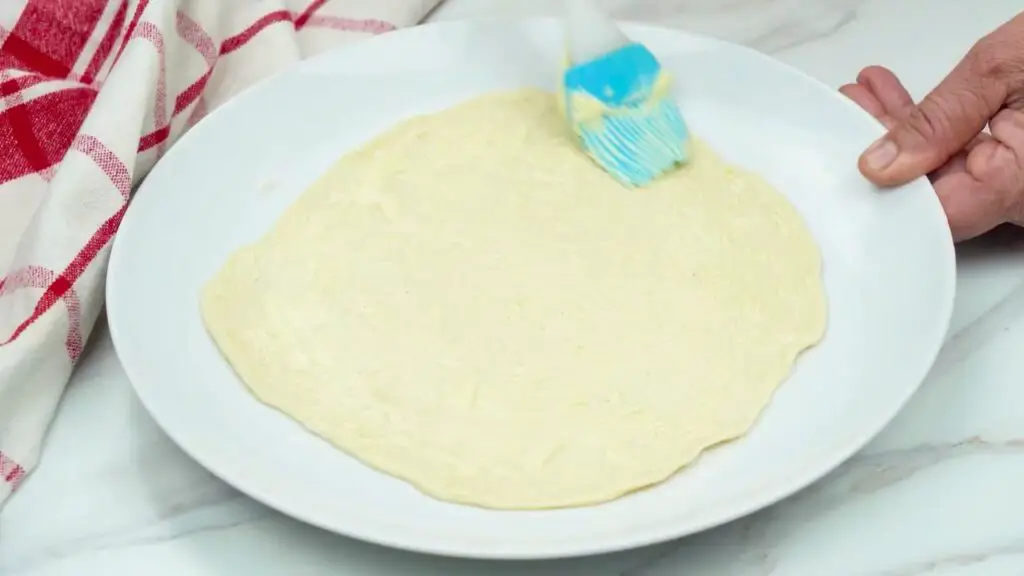
Top Tip: Soft butter works best here, not melted butter. Melted butter can soak in too quickly, while soft butter stays as a more distinct layer.
Step 10: Place the stacked dough layers on a lightly floured work surface and roll them out into a large rectangle.
Try to keep the thickness as even as you can. If the edges are very uneven, trim them for a cleaner shape.
Step 11: Cut the rectangle into 6 triangles of roughly the same size.
Even triangles will bake more evenly and give you croissants that look more consistent.
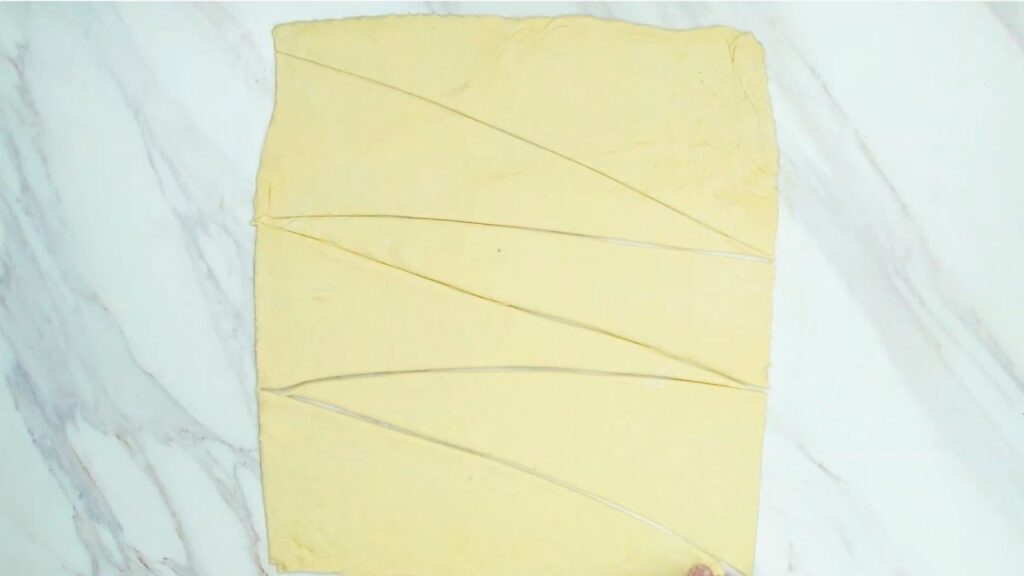
Step 12: Take each triangle and make a small cut at the wide end. Then roll each one up toward the point to shape the croissants.
That little cut helps the dough open slightly as you roll, which makes the shape easier and gives that classic croissant look.
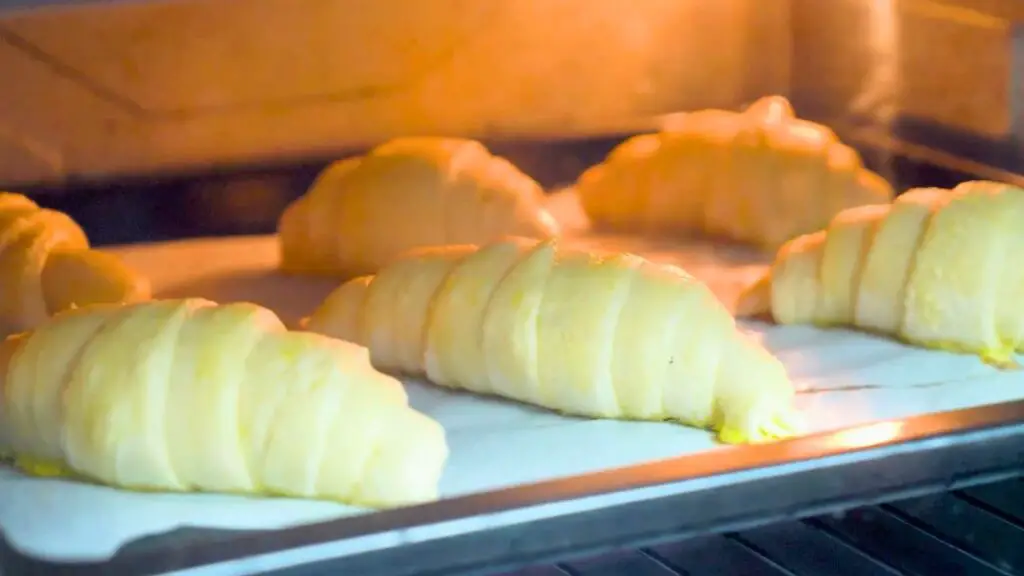
Step 13: Place the shaped croissants on a parchment paper-covered baking sheet. Let them rest at room temperature for about 1 hour.
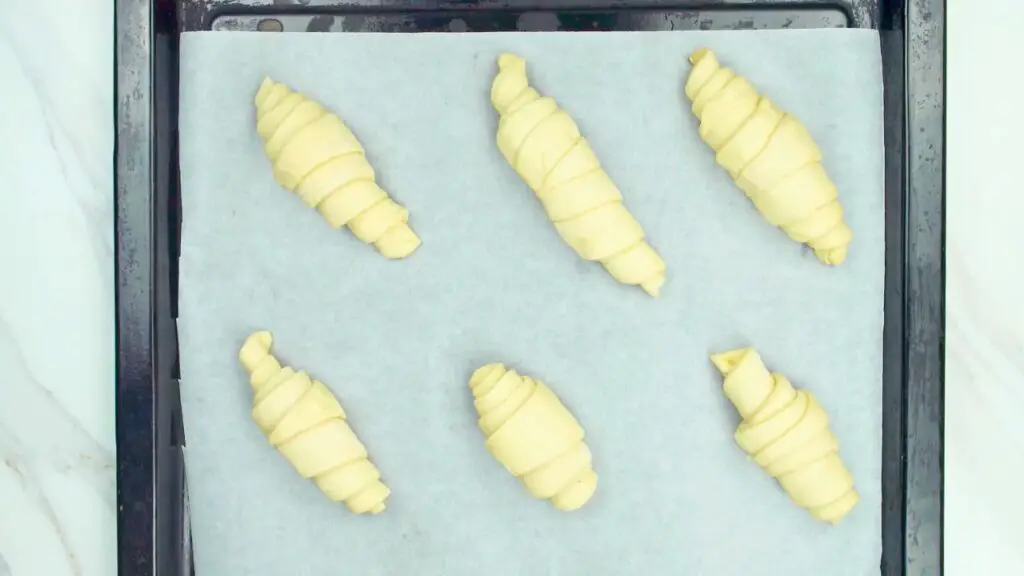
They should look a little puffier and feel lighter by the end of this second rise.
Note: Give the croissants some space on the baking sheet, because they will expand a little as they rise and bake.
Step 14: Brush the croissants with 1 beaten egg.
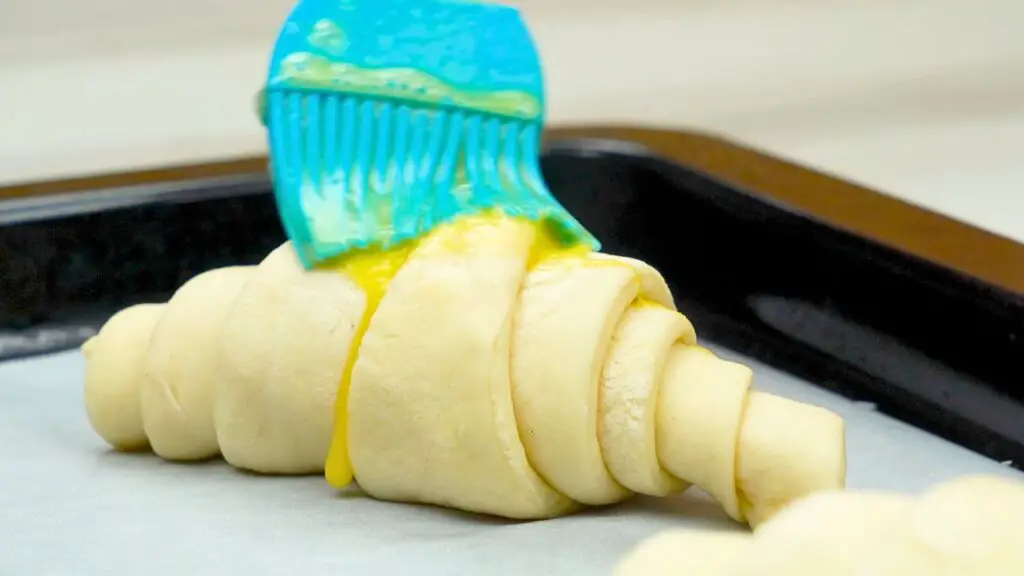
Coat the tops and sides lightly and evenly for that shiny golden finish.
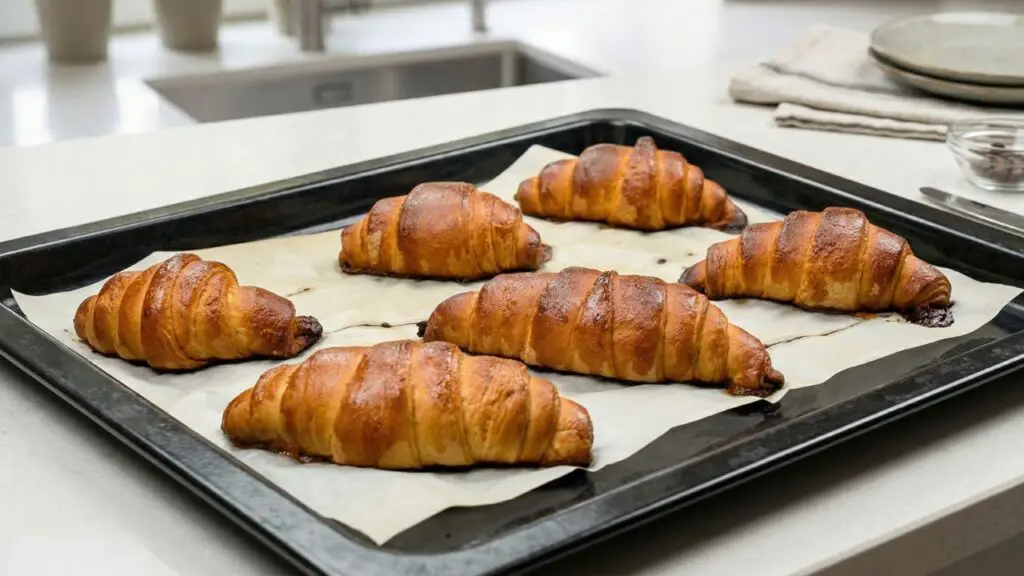
Step 15: Bake in a preheated 375°F oven, 190°C, for about 20 to 25 minutes.

Start checking at 20 minutes. The croissants should be deeply golden on top and smell rich and buttery when they are ready.
Related Recipe: If you liked this easy croissant recipe, then you should definitely check out this super simple, crispy baklava recipe here too.

The Easiest Croissant Recipe for Beginners
These homemade croissants are buttery, flaky, golden, and so much easier than they look… and the result is honestly so worth it.
8
servings2
hours20
minutes250
kcal2
hours20
minutesKeep the screen of your device on
Ingredients
1/3 cup (80-90 ml) lukewarm water
1 tbsp (10 g) sugar
1 tbsp (8 g) dry instant yeast
1/5 cup (50 ml) lukewarm milk
2/3 tsp (4 g) salt
2 cups (250 g) all-purpose flour
5 tbsp (50 g) soft butter
1 unit egg
Directions
- Add lukewarm water, sugar, and yeast to a bowl. Stir and let sit for 10 minutes to foam.
- Add lukewarm milk and salt to the yeast mixture; stir.
- Add flour, mix until a shaggy dough forms. Knead until soft and sticky.
- Incorporate 5 tbsp soft butter into the dough until fully absorbed.
- Cover the dough, rest for 1 hour until doubled in size.
- Shape the dough into a log, divide it into 8 pieces, and shape each into a ball.
- Roll each piece into a thin circle. Brush with soft butter; stack layers.
- Roll dough layers into a rectangle; cut into 6 triangles.
- Make a small cut at the wide end of the triangles; roll into a croissant shape.
- Place on a baking sheet, rest for 1 hour. Brush with beaten egg.
- Bake in a preheated oven at 190°C (375°F) for 20 minutes until golden.
Recipe Video
Notes
- Use all-purpose flour: All-purpose flour is the easiest choice for this recipe and the one most people already have at home. It gives you a soft dough that is easier to handle. Bread flour also works, but the dough can feel a little firmer and less soft.
- If the dough keeps shrinking: Stop rolling and let it rest for 5 to 10 minutes. Then try again. This gives the dough time to relax so it rolls out more easily.
- If the dough feels too sticky: Lightly flour the counter and your hands, but do not keep adding lots of extra flour. This dough should feel soft and a little sticky, not dry.
- If the butter starts leaking: Chill the shaped croissants for 15 to 20 minutes before baking. That helps the butter firm up again so the croissants keep their shape better in the oven.
- Use soft butter: Use soft butter for layering, not melted butter. Soft butter spreads more evenly, while melted butter can soak into the dough too quickly and blur the layers.
- Place seam side down: After shaping, place each croissant seam side down on the baking sheet so it is less likely to unroll in the oven. This is a small thing, but it really helps them keep their shape.
- Thin egg wash works best: Brush on a light, even coat of beaten egg right before baking. You want shine and color, not thick drips, because extra egg wash can pool around the base.
- Tent if browning fast: If the tops are getting dark before the croissants look fully baked, loosely cover them with foil for the rest of the bake. That helps the centers finish without the tops getting too brown.
Nutrition Facts
- Total number of serves: 8
- Calories: 250kcal
- Fat: 13g
- Carbohydrates: 28g
- Protein: 5g
A few tips for better croissants
This recipe is simple, but there are still a few little things that really help.
- Use lukewarm liquid, not hot. If the water or milk feels hot, let it cool a bit before using it.
- If the dough keeps springing back while rolling, let it rest for 5 to 10 minutes, then try again.
- Lightly flour your surface, but do not overdo it. Too much extra flour can make the dough harder to roll smoothly.
- Roll the stacked dough gently. You want to flatten it evenly without pressing so hard that the layers get squashed too much.
Common croissant problems
Dough is not rising
Usually, this means the yeast was not active, or the room is a little too cool. Give the dough more time if your kitchen is chilly. If the yeast never foamed in the beginning, that is the most likely issue.
Dough feels too sticky
A slightly sticky dough is normal here. If it is impossible to handle, dust your hands and work surface lightly with flour. Just a little helps.
Croissants are pale
They may need a few more minutes in the oven, or the egg wash may have been too light. You want a nice golden top for the best finish.
Croissants feel doughy inside
That usually means they needed a little more baking time. Ovens can vary, so keep an eye on the color and bake until they look properly golden.
Storage + reheating
If you have leftovers, store the croissants in an airtight container at room temperature for up to 2 days. They are best the day they are baked, but they still reheat nicely.

To reheat, warm them in a 300°F oven, 150°C, for about 5 to 8 minutes. That helps bring back some of the crispness on the outside.
Top Tip: Avoid reheating them in the microwave if you can. It tends to make the layers soft instead of lightly crisp.
More baking recipes to try
If you enjoyed learning how to make croissants, I hope you check out more baking recipes here too… especially other buttery pastries, easy homemade breads, and simple sweet treats.
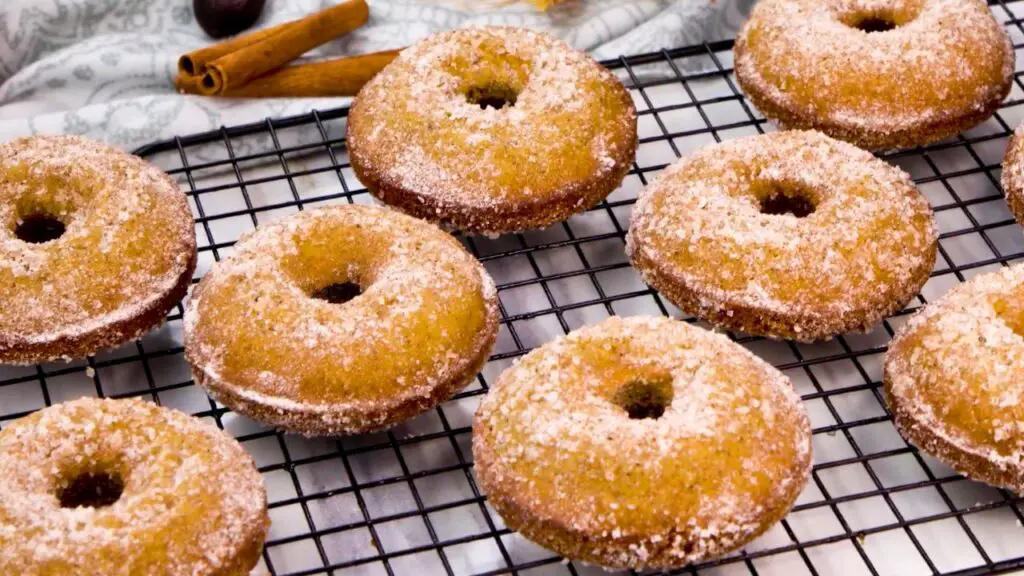
- Easy Baked Apple Cider Doughnuts – Soft, fluffy doughnuts packed with cozy apple cider flavor and baked instead of fried. A simple fall treat that’s quick to make and perfect for beginners.
- Easy Air Fryer Cheesecake Only Takes 20 Minutes To Bake – A creamy, rich cheesecake made effortlessly in the air fryer with minimal ingredients. It’s fast, foolproof, and ideal when you want a dessert without turning on the oven.
- The Crispiest Air Fryer Baked Potatoes – Perfect Every Time – Crispy on the outside and fluffy on the inside, these air fryer baked potatoes are incredibly easy to make. A reliable method for perfect results every single time.
And if you make these croissants, please leave a comment below, or ask any questions you have in the YouTube comments too.
Let me know how your croissants turned out. I always love hearing from you, and I will try to respond to all your comments and questions.