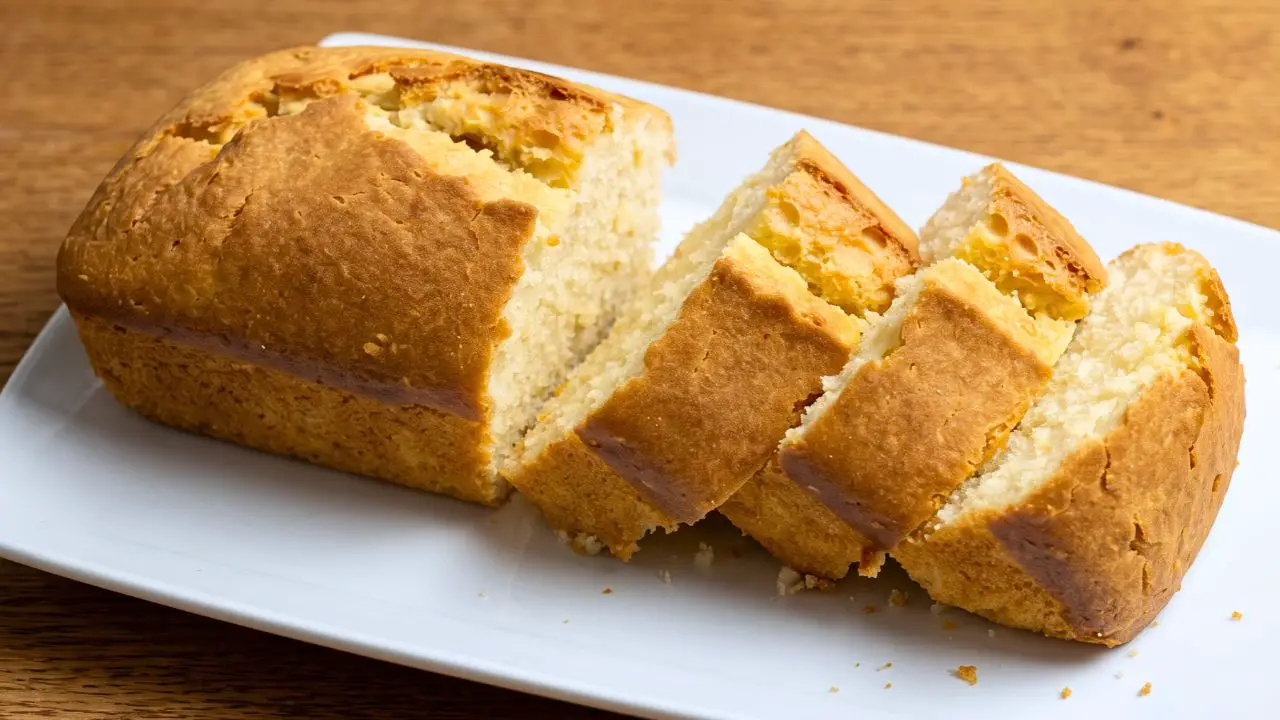
If you are looking for an easy lemon cake recipe with few ingredients, this is such a good one to start with. You only need one egg, one fresh lemon, yogurt, oil, and a few basic baking ingredients to make a soft, moist lemon cake that smells absolutely amazing while it bakes.
Come join me on Facebook here for easy recipes, cozy bakes, and little kitchen tips from my kitchen to yours.
Check out my easy lemon cake recipe video below and see just how simple this one is to make. Give the video a like and subscribe to my YouTube channel for more easy cake recipes.
Why you’ll love this lemon cake

There is nothing complicated hiding in this recipe. You do not need butter, you do not need a stand mixer, and you definitely do not need a long list of ingredients that sends you back to the grocery store.
The cake is made with oil and yogurt, which is one of my favorite combinations for simple homemade cakes. The oil helps keep the cake moist even after it cools, while the yogurt gives it that lovely soft, tender feel.
And then there is the lemon…
We use both the zest and the juice, so you get plenty of fresh lemon flavor without needing lemon extract or anything fancy.
I also love that this is a one-egg cake. Sometimes you just want to bake something simple without using half a carton of eggs, and this recipe is perfect for that.
Texture + flavor
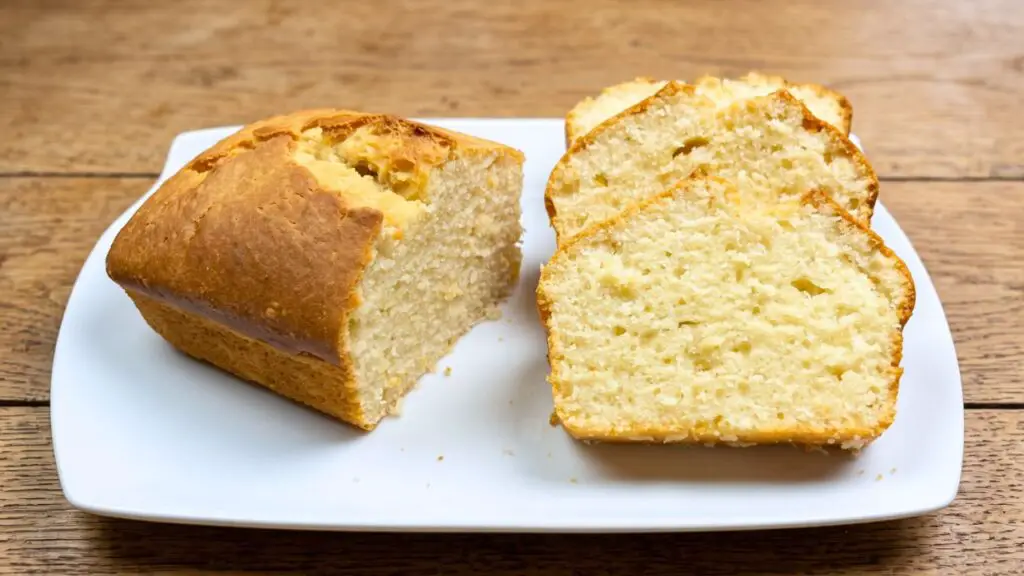
This moist lemon cake is soft and tender without feeling wet or heavy.
The lemon flavor is fresh and noticeable, but it is not sharp or overpowering. The zest gives the cake that wonderful lemony smell, while the juice adds a little tang.
The yogurt gives the cake a slight richness too, which works really well with all that fresh lemon.
And because we use oil instead of butter, the cake stays pleasantly soft even once it has cooled.
Let’s be honest… a lemon cake that still tastes good the next day is always a win in my kitchen.
Easy lemon cake ingredients
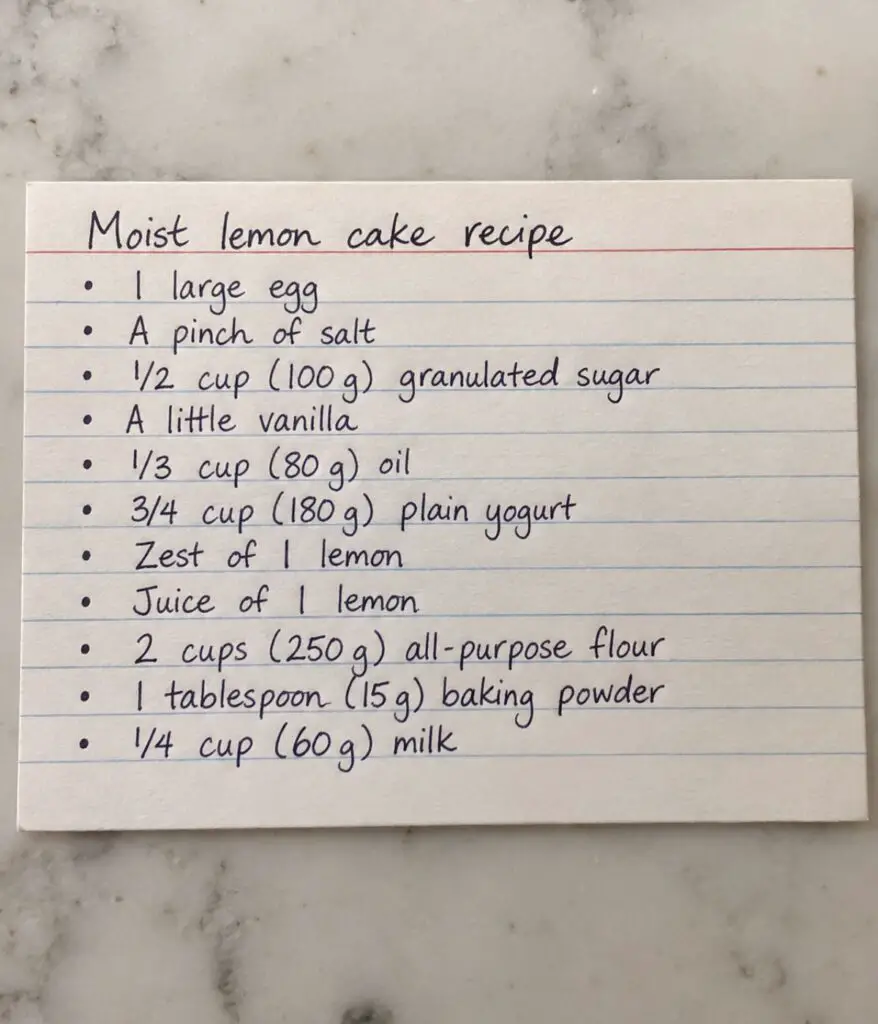
One reason I love this easy lemon cake recipe with few ingredients is that you can usually make it with things you already have at home.
Here is what you will need:
- 1 large egg, preferably at room temperature
- A small pinch of salt
- 1/2 cup (100 g) granulated sugar
- About 1/2 teaspoon vanilla extract
- 1/3 cup (80 g) neutral oil, such as vegetable or sunflower oil
- 3/4 cup (180 g) plain yogurt
- Zest of 1 lemon
- Juice of 1 lemon
- 2 cups (250 g) all-purpose flour
- 1 tablespoon (15 g) baking powder
- Up to 1/4 cup (60 g) milk, as needed to loosen the batter
Equipment you’ll need
You only need a few basic baking tools:
- Large mixing bowl
- Medium mixing bowl
- Electric hand mixer
- Silicone spatula
- Fine-mesh sifter
- Citrus zester
- Citrus juicer
- 10×5-inch loaf pan
- Parchment paper
- Toothpick or wooden skewer
You can mix the cake by hand if needed, but I prefer using an electric hand mixer for the egg and sugar because it makes getting that pale, creamy mixture much easier.
Let me show you how I make this lemon cake
Step-by-step lemon cake instructions
Step 1: Start with the egg and sugar
Crack one large egg into a mixing bowl. I like using a room-temperature egg here because it mixes more easily with the other ingredients and helps give you a smoother batter.
Then, add a small pinch of salt to balance the sweetness and help the lemon flavor stand out.
Add 1/2 cup of granulated sugar.
Then, add about 1/2 teaspoon of vanilla extract. You do not need much here, just enough to add a little extra background flavor without taking over from the lemon.
Step 2: Beat until pale and creamy
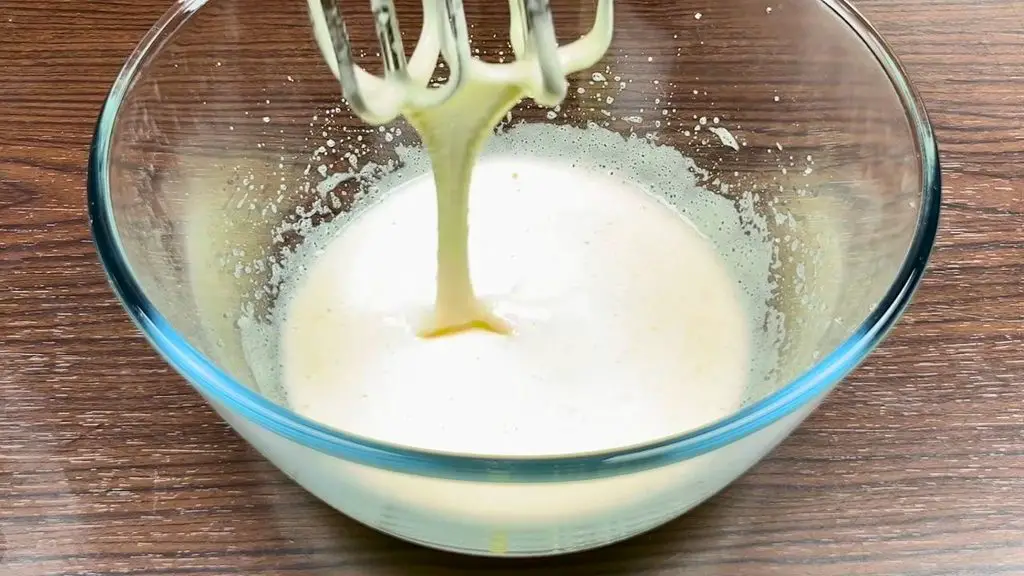
Use an electric mixer to beat everything together for about 2 to 3 minutes.
The mixture should become noticeably paler, thicker, and a little fluffy. You should really be able to see the difference from when you first started mixing.
That extra bit of mixing here helps beat some air into the egg and sugar before the heavier ingredients go in.
Step 3: Add the oil
Next, add 1/3 cup of oil and mix until it disappears into the mixture.
The oil helps keep this simple lemon cake soft and moist even after it has cooled. I like using vegetable or sunflower oil because both are mild enough to let the lemon flavor stay front and center.
Mix just until the batter looks smooth again.
Step 4: Mix in the yogurt
Add 3/4 cup of plain yogurt and mix it in.
The yogurt adds moisture and helps give the cake that soft, tender feel without needing lots of butter or extra eggs.
If your yogurt is very thick, do not worry if the batter looks a little thick at this point. We can adjust that with the milk later.
Step 5: Add the lemon zest
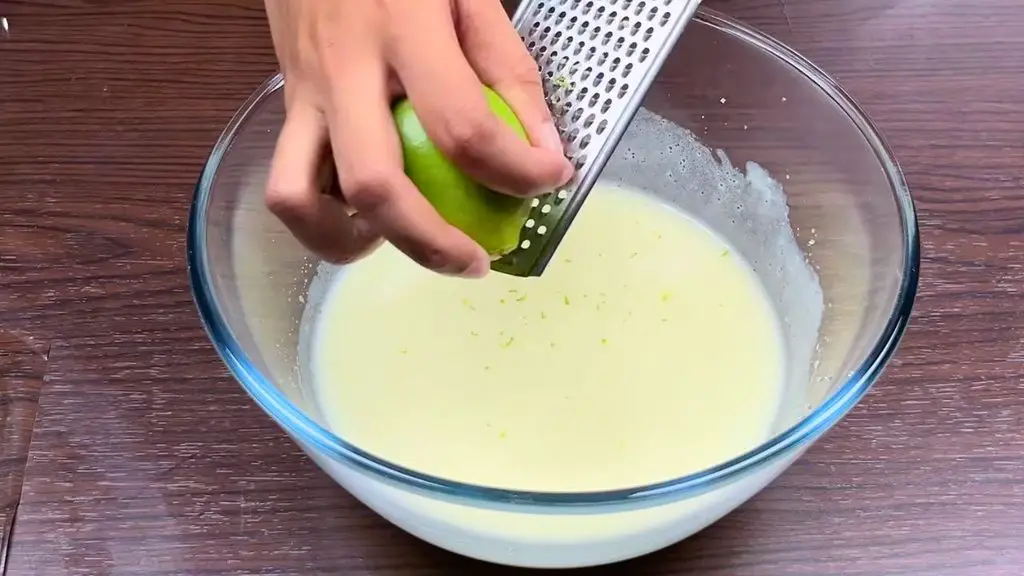
Zest one lemon over the bowl.
Try to remove only the yellow outer part of the peel. Once you start getting into the white layer underneath, stop because that part can taste bitter.
I absolutely love this step because the second you start zesting the lemon, the whole bowl smells amazing.
Step 6: Add the lemon juice
Take the same lemon you used for the zest, cut it in half, and squeeze out the juice.
I like using a citrus juicer here because you get plenty of juice without much effort, and it helps keep the seeds out too.
Pour the lemon juice into the batter and give everything a quick mix.
Adding the flour
Step 7: Mix the dry ingredients
Take a separate mixing bowl and add 2 cups of all-purpose flour.
Then, add 1 tablespoon of baking powder and give the flour a quick mix so the baking powder is spread evenly through it.
Step 8: Sift in the flour
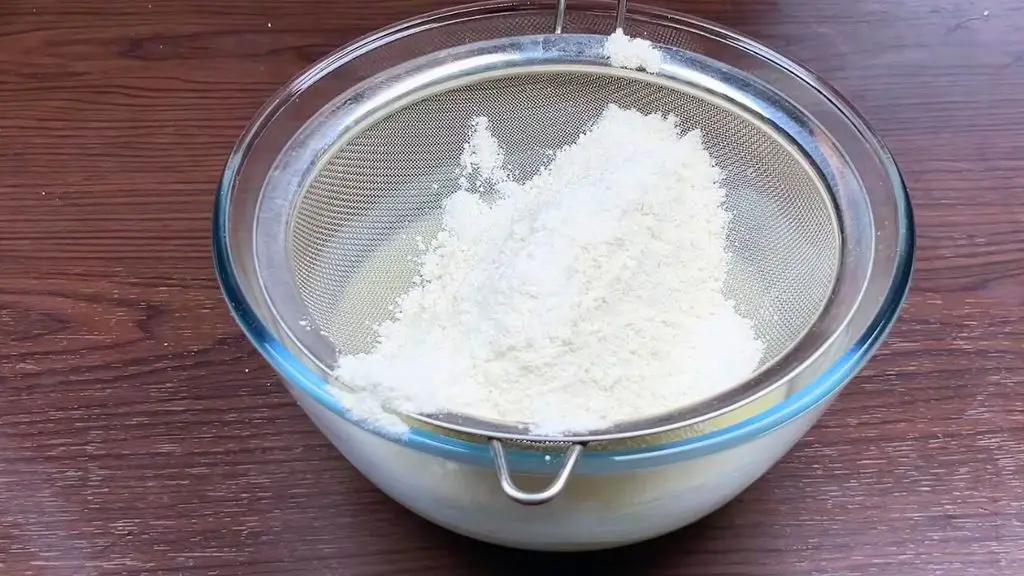
Sift about half of the flour mixture into the cake batter first.
Give it a gentle mix just until most of the flour disappears.
Then, sift in the remaining flour and mix again.
Adding the flour in two portions makes it much easier to mix without working the batter more than necessary. Sifting also gets rid of little flour lumps before they ever have a chance to end up in the finished cake.
Top Tip: Once the flour goes in, stop mixing as soon as you no longer see dry flour. Mixing too much at this stage can make the cake heavier and firmer.
Getting the batter just right
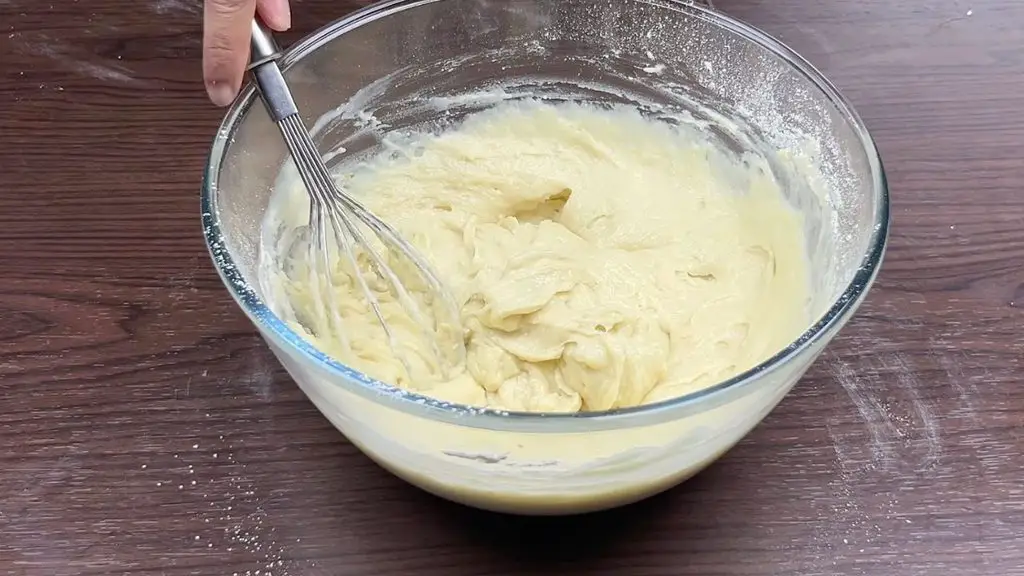
Step 9: Check the thickness
If the cake batter looks a little too thick, add a small splash of milk and mix it through.
The batter should be smooth and pourable, kind of like a thick pancake batter. You do not want it watery, but it should still fall from the spatula without sitting there like dough.
Add a little more milk if needed.
The exact amount can vary slightly because lemons come in different sizes, yogurts can be thicker or thinner, and flour does not always absorb liquid exactly the same way.
Note: Do not automatically pour in all the milk. Add only enough to make the batter thick but pourable.
Preparing the loaf pan
Step 10: Line the pan
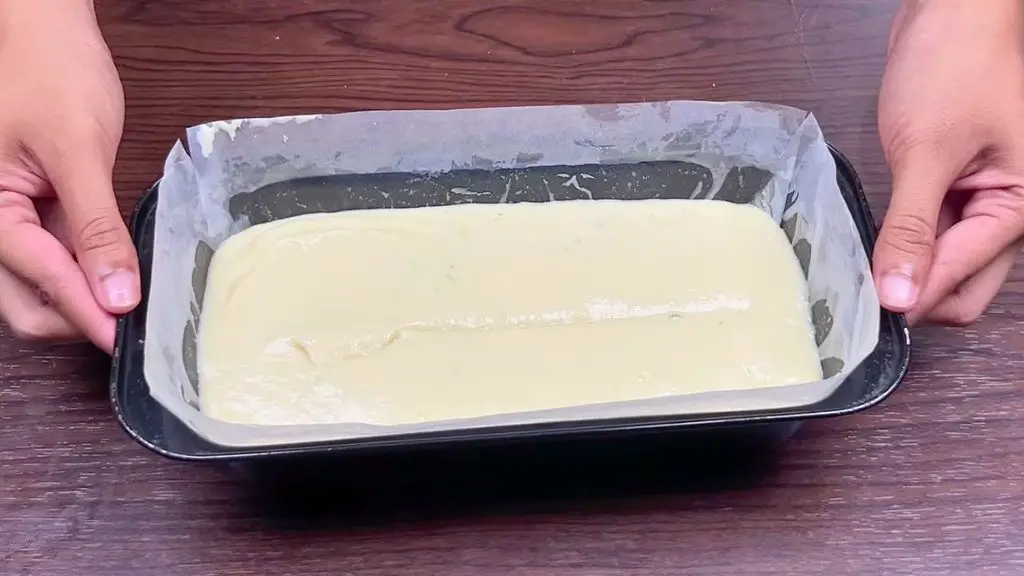
Line a 10×5-inch loaf pan with parchment paper, leaving a little extra hanging over the sides.
That extra parchment makes things much easier later because you can use it to lift the cooled cake out instead of trying to turn the loaf upside down.
Pour the batter into the prepared pan and use a spatula to get as much of that lovely batter out of the bowl as you can. We made it, so we might as well bake all of it!
Gently spread the batter so it sits evenly in the pan, and the top looks fairly level.
I also like to make a shallow line down the center of the batter with the edge of my spatula. It gives the cake a little guide for where it naturally wants to split as it rises and helps give the top that classic loaf-cake look.
Baking the moist lemon cake
Step 11: Bake until golden

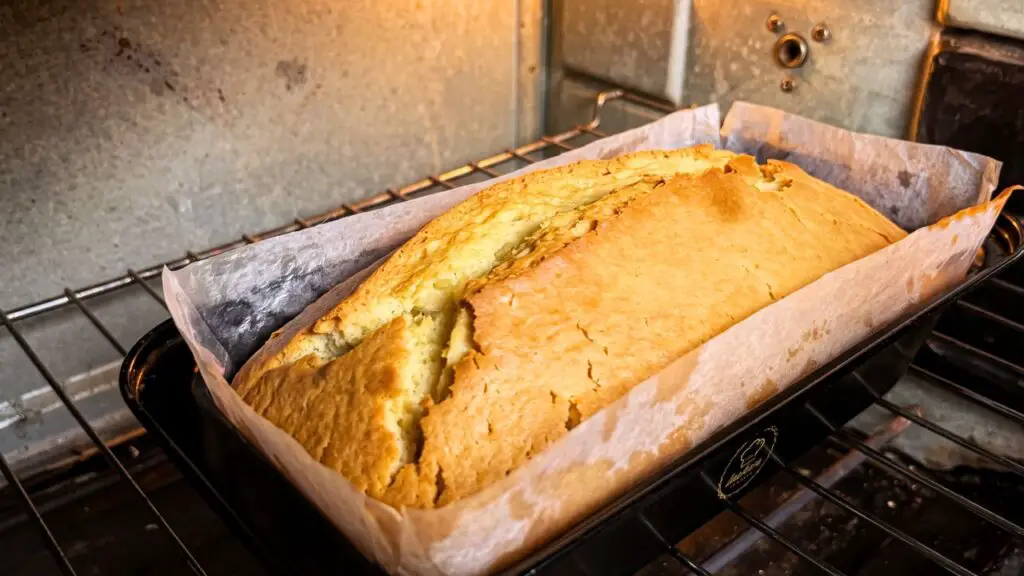
Bake the lemon cake in a preheated oven at 356°F (180°C) for about 30 to 35 minutes.
Start checking it around the 30-minute mark.
You will know the cake is nearly ready once the top turns a lovely golden brown and your kitchen starts smelling absolutely amazing.
I still always check the middle before taking it out because the outside can look ready a few minutes before the center actually is.
Insert a toothpick or wooden skewer into the center. If it comes out clean, or with just a few soft moist crumbs, the cake is ready.
If you see wet batter, give it another few minutes and check again.
Top Tip: Try not to open the oven during the first 25 minutes. The cake needs steady heat while it rises, and opening the door too early can make the center sink.
Let the cake cool

Leave the cake in the pan for about 5 to 10 minutes after it comes out of the oven. Then, use the parchment paper to lift it onto a cooling rack.
I know it is tempting to slice into it straight away because by this point your whole kitchen smells like lemon cake… but give it a little time.
The inside is still setting as it cools, and slicing it while it is very hot can make the center look wetter and softer than it actually is.
For the nicest slices, let it cool until it is just slightly warm or completely at room temperature.
Related Recipe: And if you like the Starbucks lemon loaf cake, check out my homemade Starbucks-style lemon loaf cake too. You can make a whole loaf at home for less than the price of just one slice from Starbucks.

Simple moist lemon cake recipe with few ingredients
This easy lemon cake recipe with few ingredients is perfect when you want something simple but still really delicious. It is soft, moist, full of fresh lemon flavor, and so easy to make.
6
servings15
minutes35
minutes375
kcal50
minutesIngredients
1 large 1 large egg
1 pinch 1 pinch salt
1/2 cup 1/2 cup (100 g) granulated sugar
little little vanilla
1/3 cup 1/3 cup (80 g) oil
3/4 cup 3/4 cup (180 g) plain yogurt
1 zest 1 zest lemon
1 juice 1 juice lemon
2 cups 2 cups (250 g) all-purpose flour
1 tablespoon 1 tablespoon (15 g) baking powder
1/4 cup 1/4 cup (60 g) milk
for greasing for greasing butter
for dusting for dusting flour
Directions
- Preheat oven to 180°C (356°F) and line a 10×5 inch loaf pan with parchment paper.
- Crack the egg into a mixing bowl, add a pinch of salt, granulated sugar, and vanilla. Beat with an electric mixer until pale and fluffy.
- Stir in oil, followed by yogurt, lemon zest, and lemon juice until smooth.
- In a separate bowl, mix together all-purpose flour and baking powder.
- Sift half the flour mixture into the batter and mix gently. Then, sift in the rest and mix until smooth.
- If the batter is too thick, add milk and mix until pourable.
- Pour batter into the prepared loaf pan, smooth the top, and make a shallow line down the middle.
- Bake for 30-35 minutes until golden brown and a toothpick comes out clean.
- Let the cake cool before lifting it out using the parchment overhang.
Recipe Video
Notes
- Use the right yogurt: Plain whole-milk yogurt gives the cake the softest texture. Greek yogurt also works, but if it is very thick, you may need a little extra milk to loosen the batter.
- Do not overmix flour: Once you add the flour, mix only until the dry streaks disappear. Too much mixing can make the cake heavier instead of soft and tender.
- Check before it overbakes: Start checking the cake at about 30 minutes. A toothpick or skewer should come out clean or with just a few moist crumbs, not wet batter.
- Cover if browning early: If the top gets dark before the center is baked, loosely cover the loaf with foil for the last few minutes. This lets the middle finish baking without making the top too brown.
- Store it the easy way: Keep the cooled cake well covered at room temperature for a few days. For longer storage, freeze the whole loaf or individual slices and thaw them at room temperature when needed.
- Serve it simply: This lemon cake is good on its own, but you can add a light dusting of powdered sugar or serve it with fresh berries. A cup of coffee or tea goes really well with it too.
Nutrition Facts
- Total number of serves: 6
- Calories: 375kcal
- Fat: 16g
- Carbohydrates: 52g
- Protein: 7g
How to store lemon cake
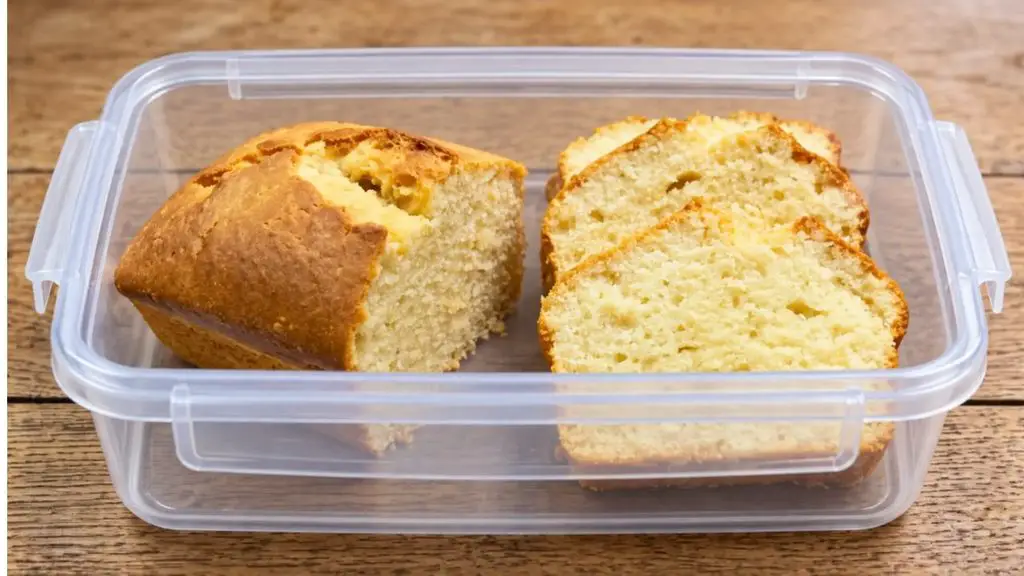
Once the cake has cooled completely, keep it in an airtight container.
At room temperature, it should stay good for about 2 days.
If your kitchen is very warm, or you want to keep it longer, refrigerate it for around 4 to 5 days.
I prefer letting a refrigerated slice sit at room temperature for a little while before eating it. The cake softens again and the lemon flavor comes through much better than when it is fridge-cold.
How I like to serve it

Honestly, I usually eat this cake exactly as it is. It does not really need anything else.
A slice with coffee or tea is sooo good, especially in the afternoon when you want something sweet but do not necessarily want a huge dessert.
You can also dust the top lightly with powdered sugar if you want to dress it up a little. Fresh berries on the side are lovely too, especially strawberries, raspberries, or blueberries.
More cake recipes to try
If you enjoyed this easy lemon cake recipe, have a look at some of my other cake recipes below too. I am always testing another cake around here… How can you not?!

- Simple Semolina Fruit Cake – This easy semolina fruit cake has a soft, tender texture with plenty of fruity flavor in every slice. It’s a lovely homemade cake to enjoy with tea or coffee.
- Moist Desiccated Coconut Cake Recipe – This soft and moist cake is made with desiccated coconut for plenty of coconut flavor and texture. It’s a simple bake that tastes delicious on its own.
- Moist Apple Cinnamon Loaf Cake – Sweet apples and warm cinnamon come together in this soft, moist loaf cake. It’s an easy homemade bake that’s especially good served slightly warm.
And if you make this moist lemon cake, please leave me a comment and tell me how yours turned out. If you have a question about the recipe, leave that below too, or ask me in the YouTube video comments. I try to respond to as many comments and questions as I can.