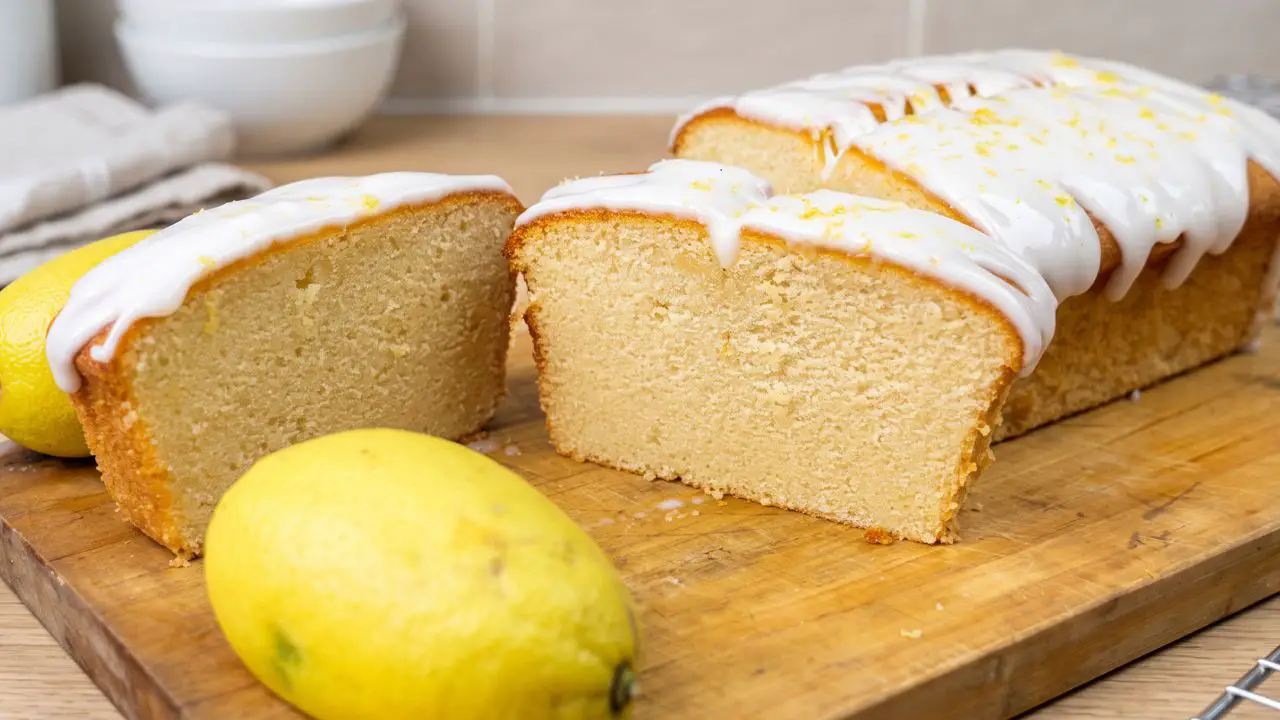
This homemade Starbucks lemon loaf cake is soft, moist, and full of fresh lemon flavor. Even better, you can make a whole loaf at home for around the price of one coffee shop slice…and it tastes so good fresh from the oven!
Come join me on Facebook here for easy recipes, cozy bakes, and little kitchen tips from my kitchen to yours.
Check out my Starbucks lemon loaf cake recipe video below and see exactly how I make it. If you enjoy it, tap like and subscribe to my YouTube channel for more easy cake recipes.
Why you’ll love this lemon loaf

This recipe gives you a full lemon loaf using everyday baking ingredients, and the method is simple enough to follow without any special baking skills. The batter comes together in one bowl, and the glaze only takes a few minutes to make.
It is also a practical recipe if you usually buy lemon cake by the slice. One loaf gives you eight generous servings, so you can enjoy it over a few days or serve it when family or friends come over.
The fresh lemon zest and juice give the cake a clear lemon flavor, while the butter and oil help it stay moist after it cools. The glaze adds a sweeter lemon finish without covering up the flavor of the cake underneath.
Texture and flavor

The inside of this lemon loaf is soft, moist, and tender, but it still holds together nicely when sliced. It is not dry or overly heavy, and the outside develops a light golden finish as it bakes.
The lemon flavor is fresh without being too sharp. The cake itself is buttery and sweet, while the glaze adds another little burst of lemon on top.
I also love that we are using simple ingredients with no preservatives or anything strange added. It tastes fresh, homemade, and so much nicer than a packaged coffee shop slice, in my opinion.
Did You Know: Most of the strongest lemon flavor comes from the oils in the zest, not only from the juice.
Starbucks lemon loaf cake ingredients
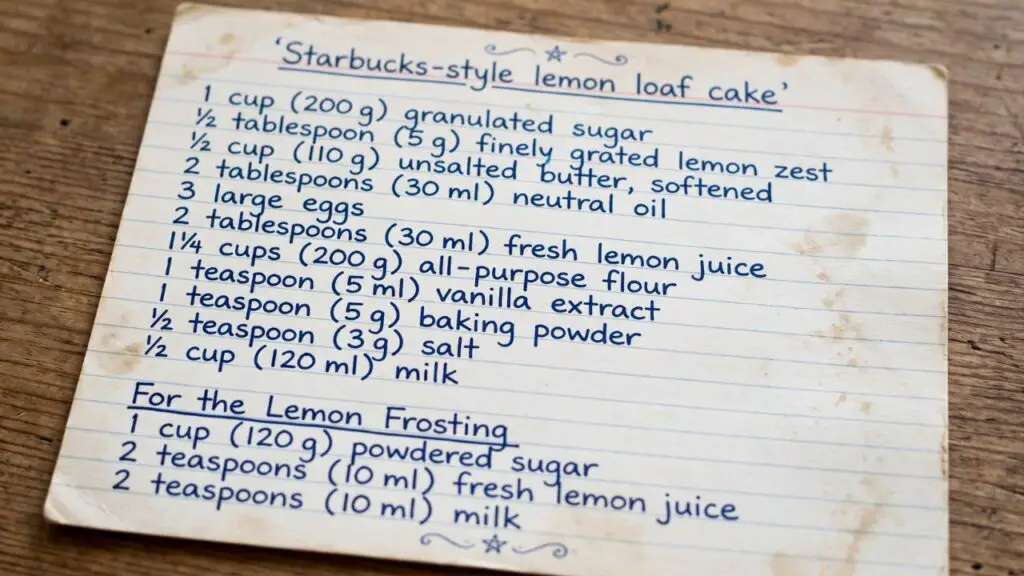
For the lemon loaf
- 1 cup granulated sugar (200 g)
- Finely grated zest from 1 fresh lemon
- 1/2 cup unsalted butter, at room temperature (110 g)
- 2 tablespoons mild-tasting oil (30 ml)
- 3 large eggs
- 2 tablespoons fresh lemon juice (30 ml)
- 1 1/4 cups all-purpose flour (200 g)
- 1 teaspoon vanilla extract or vanilla powder (5 ml or 5 g)
- 1 teaspoon baking powder (5 g)
- 1/2 teaspoon salt (3 g)
- 1/2 cup milk (120 ml)
For the lemon glaze
- 1 cup powdered sugar (120 g)
- 2 teaspoons fresh lemon juice (10 ml)
- 2 teaspoons milk (10 ml)
Equipment you’ll need
- Fine grater or zester
- Citrus juicer, optional
- Large mixing bowl
- Spatula
- Sieve
- Whisk
- 9×5-inch loaf pan
- Parchment paper
- Toothpick
- Small bowl for the glaze
- Small plastic food bag, optional
How to make Starbucks lemon loaf cake

Step 1: Prepare the lemon zest
To make this moist lemon loaf cake, start by finely grating the zest from one fresh, unwaxed lemon. If your lemon is waxed, wash it well with warm water and dry it before zesting.

Use the smallest holes on your grater, and only grate the bright yellow skin. Avoid the white part underneath because it can make the cake taste bitter.
Step 2: Squeeze the lemon juice
Next, cut the lemon in half and squeeze out two tablespoons of fresh lemon juice for the cake batter, making sure you remove any seeds that fall in as you go.

Set the juice aside so it is ready when you need it. Keep the other half of the lemon because you will need another two teaspoons of fresh lemon juice for the glaze later.
Step 3: Mix the lemon sugar
Next, add one cup of granulated sugar and the lemon zest you just prepared to a large mixing bowl.
Use a spatula to mix them together for about one minute, pressing the zest into the sugar as you go. The sugar should start to look slightly damp and take on a pale yellow color.
Top Tip: Mixing the zest into the sugar helps release the natural lemon oils, which give the finished cake a stronger and fresher lemon flavor.
Step 4: Add the butter
Next, add half a cup of room-temperature unsalted butter to the lemon sugar.
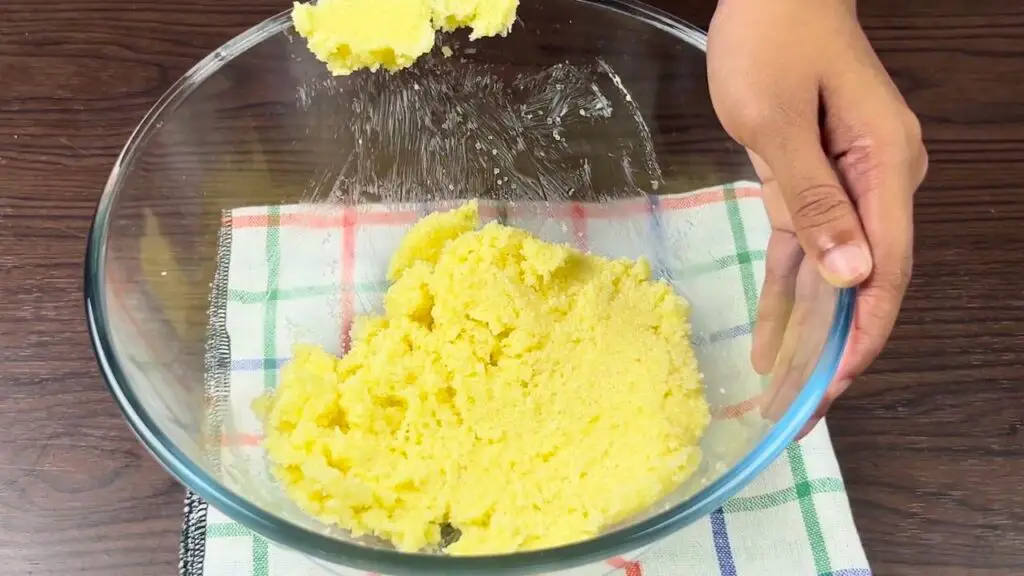
Mix it well with the spatula, pressing and folding everything together until the butter is fully worked into the sugar. Keep going until the mixture looks smooth and creamy, with no large pieces of butter left.
Step 5: Add the oil
Next, pour in two tablespoons of oil and mix it into the butter and sugar mixture.
Any mild-tasting oil will work well here, such as light olive oil, avocado oil, vegetable oil, or sunflower oil. Keep mixing until the oil is fully blended in and the mixture looks smooth, creamy, and slightly glossy.
Step 6: Mix in the eggs
Next, add three large eggs one at a time, mixing well after each one.
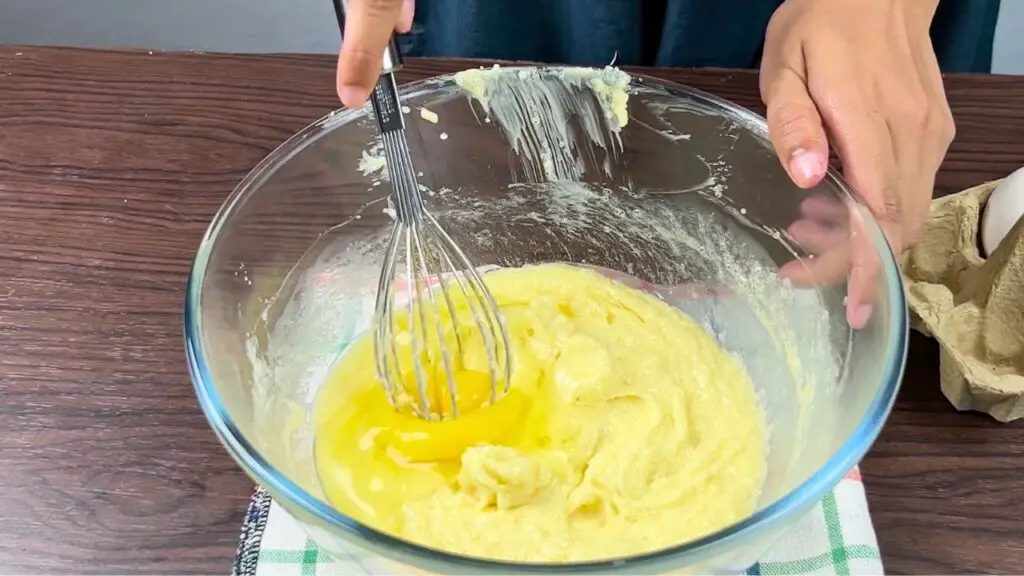
Wait until each egg is fully worked into the mixture before adding the next. This helps everything combine evenly and keeps the batter smooth instead of watery.
Step 7: Add the lemon juice
Next, add the two tablespoons of fresh lemon juice you squeezed earlier and give the batter a quick stir until everything is combined.
It is not a huge amount of juice, but it is enough to bring out that fresh lemon taste without making the cake too sharp or sour. Along with the zest already in the bowl, it gives the loaf a proper lemon flavor that comes through nicely in every slice.
Step 8: Sift in the dry ingredients
Next, place a sieve over the bowl and add one and a quarter cups of all-purpose flour, one teaspoon of vanilla powder, one teaspoon of baking powder, and half a teaspoon of salt.
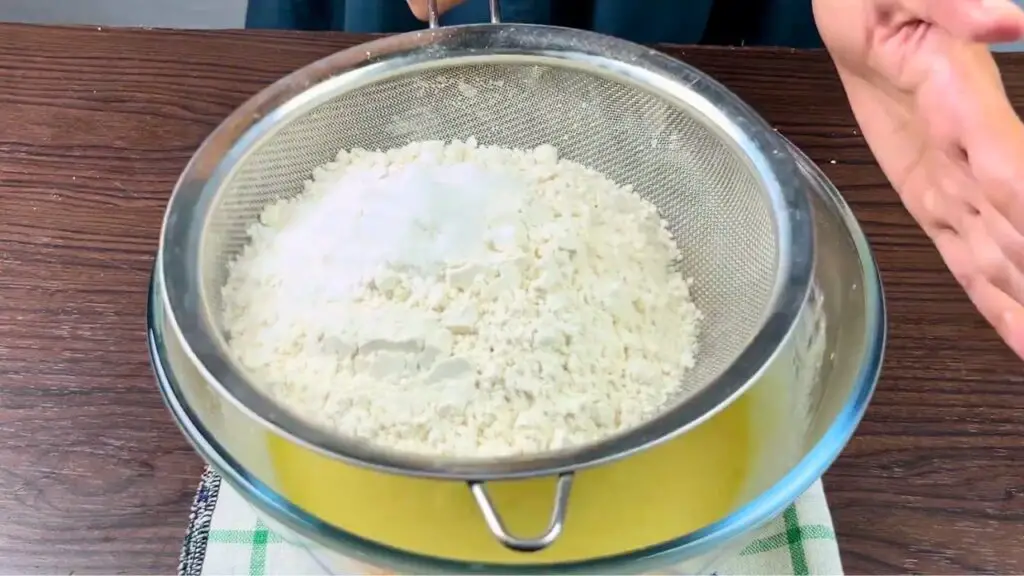
Sift all the dry ingredients into the bowl, then mix until everything is just combined. Stop once you can no longer see any dry flour, since mixing for too long can make the loaf feel heavier.
Note: When using vanilla extract instead of vanilla powder, add it with the milk in the next step rather than putting it through the sieve.
Step 9: Add the milk
Next, add half a cup of milk and mix it gently into the batter until everything comes together.
The batter should now look smooth and thick, but it should still be loose enough to pour easily into the loaf pan. Make sure there are no dry patches of flour or thick pockets of batter left behind. The texture should look even throughout, just like you can see in the video.
Step 10: Fill the loaf pan
Next, line a 9×5-inch loaf pan with parchment paper, leaving some extra parchment paper hanging over the edges so you can easily lift the loaf out after baking.
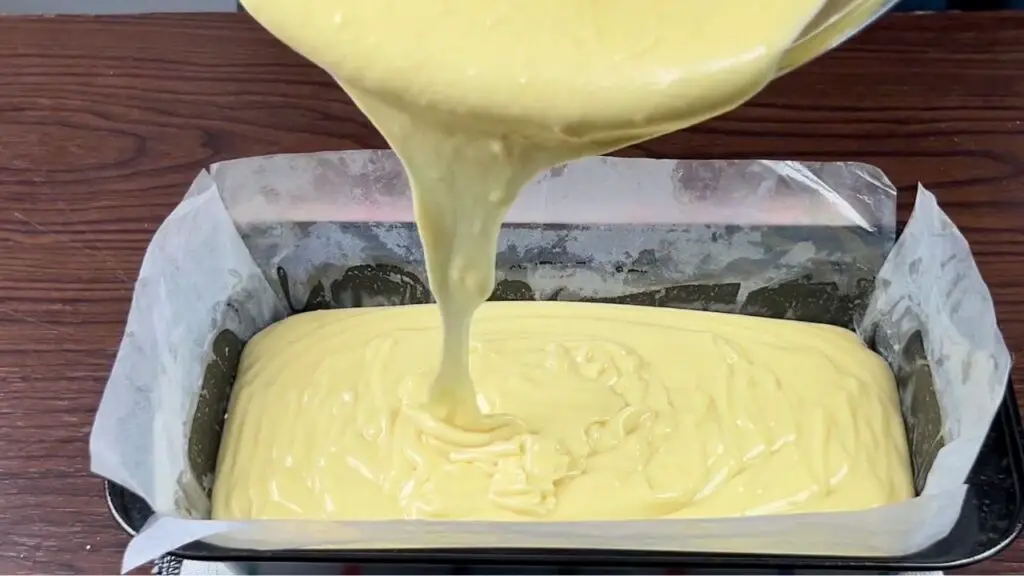
Pour all the batter into the prepared pan, and make sure you get as much as possible out of the bowl because we do not want to waste any of that lovely lemon batter. Spread it evenly across the pan, then gently tap the pan on the counter a few times to help the batter settle into the corners.
Step 11: Bake the lemon loaf
Bake the cake in a preheated oven at 320°F (160°C) for 40 to 50 minutes, until the top has turned a light golden color and your kitchen smells absolutely amazing.
You will know it is fully baked when a toothpick pushed into the center comes out clean or with just a few moist crumbs. Start checking the cake around the 40-minute mark so it does not stay in the oven for too long and become dry.
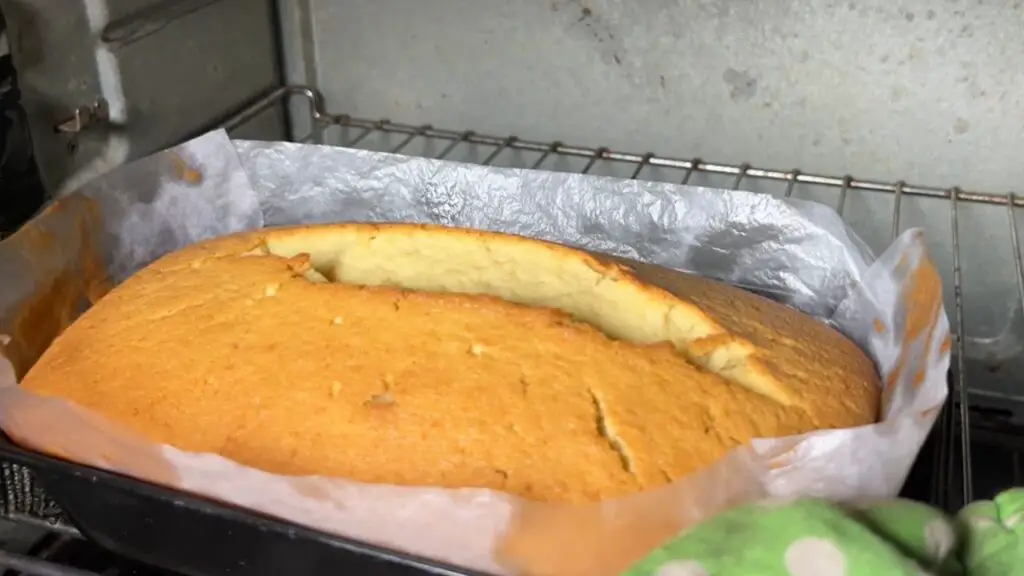
Top Tip: If the top is browning before the middle has finished baking, loosely cover the loaf with a piece of foil for the remaining time.
Step 12: Let the cake cool
Then, carefully lift the cake out of the pan using the parchment paper.
Gently peel away the parchment paper, taking care not to tear the loaf while it is still warm. Leave the cake to cool completely while you make the lemon glaze.
Note: Do not glaze the cake while it is warm. The heat can melt the glaze and make it run off instead of sitting nicely on top.
How to make the lemon glaze
For the glaze, add one cup of powdered sugar, two teaspoons of fresh lemon juice, and two teaspoons of milk to a small bowl, then whisk everything together.
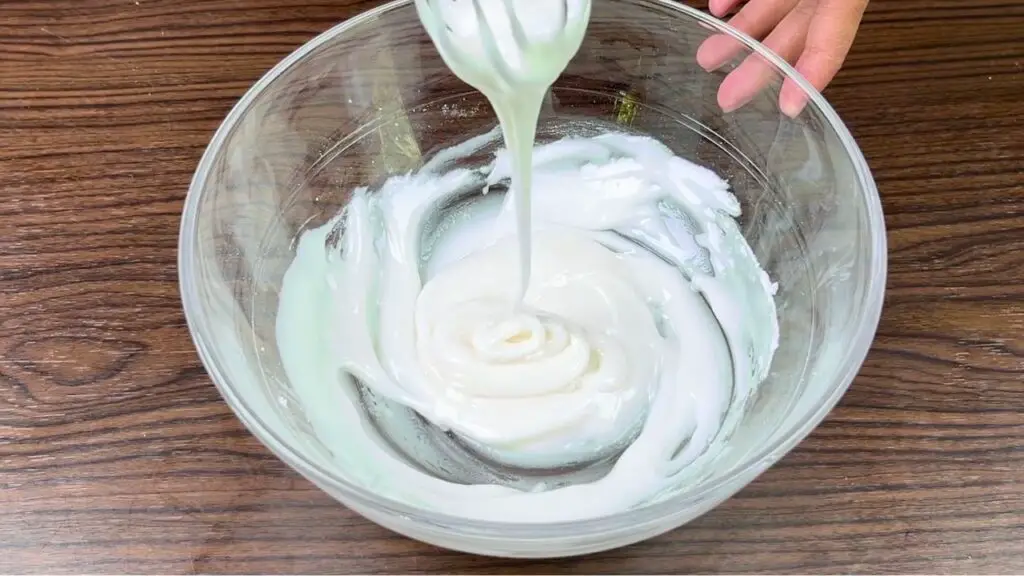
At first, it may look as though there is not enough liquid, but after a little whisking, the powdered sugar will start to loosen, and the glaze will come together. Keep whisking until it looks completely smooth and there are no small lumps left.
You want the glaze to be thick enough to stay on top of the cake instead of running straight off, but still loose enough to drizzle easily. When you lift the whisk above the bowl, the glaze should slowly drip from it in a thick, steady line, just like you can see in the video.
Glaze too thick or thin?
If the glaze is too thick to drizzle, mix in a very small splash of milk. Add only a little at a time because the texture can loosen quickly.
If it becomes too thin, add another spoonful of powdered sugar and whisk again. The glaze should pour slowly and leave a thick coating on the loaf.
How to glaze the cake

You can drizzle the glaze over the cake with a spoon, but I like to pour it into a small plastic bag for a neater finish. Snip a small opening in one corner, then drizzle all of the glaze over the cooled loaf and let some run down the sides, just like you can see in the video. Add a little fresh lemon zest on top, then leave the glaze to set for a few minutes before slicing.
Related Recipe: If you liked this easy lemon cake with lemon glaze, make sure you check out my lemon poppy seed loaf cake here also.

Easy Starbucks Lemon Loaf Cake Recipe
A soft, moist lemon loaf packed with fresh lemon flavor and finished with a thick, sweet lemon glaze. Every slice is tender, bright, and perfectly balanced between tangy citrus and sweet icing, making it ideal for breakfast, dessert, or an afternoon treat.
8
servings20
minutes50
minutes415
kcal1
hour10
minutesIngredients
1 cup 1 (200 g) granulated sugar
½ tablespoon ½ (5 g) finely grated lemon zest
½ cup ½ (110 g) unsalted butter, softened
2 tablespoons 2 (30 ml) neutral oil
3 large 3 eggs
2 tablespoons 2 (30 ml) fresh lemon juice
1¼ cups 1¼ (200 g) all-purpose flour
1 teaspoon 1 (5 ml) vanilla extract
1 teaspoon 1 (5 g) baking powder
½ teaspoon ½ (3 g) salt
½ cup ½ (120 ml) milk
- Lemon Glaze
1 cup 1 (120 g) powdered sugar
2 teaspoons 2 (10 ml) fresh lemon juice
2 teaspoons 2 (10 ml) milk
Directions
- Preheat the oven to 160°C (320°F) and line a 9×5-inch loaf pan with parchment paper.
- Finely grate the zest of one lemon and squeeze out 2 tablespoons of lemon juice.
- Mix 1 cup sugar with lemon zest in a bowl until the sugar looks damp.
- Add softened butter and mix until smooth and creamy.
- Stir in 2 tablespoons of oil until well combined.
- Mix in 3 large eggs, one at a time, until fully incorporated.
- Add 2 tablespoons of lemon juice and mix well.
- Sift in flour, vanilla powder, baking powder, and salt; mix until just combined.
- Add 0.5 cup milk; mix until smooth.
- Pour batter into prepared pan, spread evenly, and gently tap to release air pockets.
- Bake for 40-50 minutes until a toothpick comes out clean.
- Let the cake cool, then remove from the pan.
- For glaze, whisk together powdered sugar, 2 teaspoons of lemon juice, and milk until smooth.
- Drizzle glaze over cooled cake; let set before slicing.
Recipe Video
Notes
- Use Mild Tasting Oil: Light olive oil, avocado oil, vegetable oil, or sunflower oil will all work. Avoid strong extra virgin olive oil because its flavor may overpower the lemon.
- Measure Flour Without Packing: Spoon the flour into the measuring cup and level the top. Packing flour into the cup can add too much and leave the loaf dry or heavy.
- Stop the Top Burning: If the loaf turns brown before the middle finishes baking, loosely cover the top with foil. Continue baking until a toothpick inserted into the center comes out clean or with a few moist crumbs.
- Adjust the Lemon Glaze: Add a little more powdered sugar if the glaze looks too thin. If it feels too thick to drizzle, whisk in a few drops of milk at a time until it slowly runs from the whisk.
- Use Room Temperature Ingredients: Let the butter, eggs, and milk sit out before you start. They mix together more smoothly and help the loaf bake more evenly.
- Do Not Overmix Batter: Mix only until you no longer see dry flour. Too much mixing can make the loaf firm instead of soft.
- Cool Before Adding Glaze: Let the cake cool completely before glazing it. A warm loaf can melt the glaze and make it slide off the top.
Nutrition Facts
- Total number of serves: 8
- Calories: 415kcal
- Fat: 17g
- Carbohydrates: 60g
- Protein: 6g
Common lemon loaf problems

Why did my loaf turn out dry?
The most common reason is baking it for too long. Start checking at 40 minutes, even if the full baking time says up to 50 minutes, because every oven heats a little differently.
Using too much flour can also dry out the cake. Spoon the flour into the measuring cup and level it off rather than packing it down.
Why did the middle sink?
The loaf may sink if the oven door is opened too early or if the center has not finished baking. Try not to open the door during the first 35 minutes.
Check the very center with a toothpick before taking it out. If wet batter sticks to the toothpick, give it a few more minutes.
Why is the glaze running off?
The cake may still be warm, or the glaze may have too much liquid in it. Let the loaf cool fully and thicken the glaze with a little more powdered sugar before trying again.
Why does the cake taste bitter?
Make sure you only grate the yellow part of the lemon peel. The white layer underneath is bitter and can affect the flavor of the whole loaf.
You can use salted butter if that is what you already have. Just reduce the added salt to one-quarter teaspoon.
Vanilla extract can replace vanilla powder using the same amount. Add the extract with the milk so it blends smoothly into the batter.
Whole milk gives the loaf a slightly richer texture, but 2 percent milk also works well. I would avoid using a strongly flavored plant milk because it may compete with the lemon.
How to store lemon loaf cake

Keep the glazed lemon loaf in an airtight container at room temperature for up to two days.
For longer storage, place it in the refrigerator for up to five days. Let a slice sit at room temperature for a little while before eating because the texture is softer and the lemon flavor comes through better when it is not fridge-cold.
Serving ideas

This Starbucks-style lemon loaf cake is lovely with coffee or tea, especially when you want something sweet in the afternoon.
You can serve it as it is, or add fresh berries on the side for a simple dessert. A spoonful of lightly whipped cream also works well, although the lemon glaze already gives the cake plenty of sweetness.
And let’s be honest…a thick slice eaten straight from the container the next morning is pretty hard to beat!
More easy cake recipes
If you enjoyed this easy lemon cake with lemon glaze, make sure you check out the other simple and super delicious cake recipes on my channel. There are plenty more homemade cakes to try, and I think you are going to love them too.

- This Moist Date Cake Recipe – A soft and moist date cake with rich caramel-like flavor that’s perfect for afternoon tea or a cozy homemade dessert.
- Semolina Fruit Cake – This tender semolina fruit cake is packed with dried fruit and has a wonderfully soft texture with every slice.
- Moist Desiccated Coconut Cake Recipe – A light, fluffy coconut cake made with desiccated coconut for delicious texture and rich coconut flavor in every bite.
If you make this Starbucks lemon loaf cake, leave me a comment below or in the YouTube video comments and tell me how it turned out. You can also leave any questions you have about the recipe, and I will try to reply to every comment and help where I can.